1. Material Science and Practical Mechanisms
1.1 Definition and Classification of Lightweight Admixtures

(Lightweight Concrete Admixtures)
Light-weight concrete admixtures are specialized chemical or physical ingredients designed to reduce the thickness of cementitious systems while maintaining or enhancing structural and functional efficiency.
Unlike typical accumulations, these admixtures introduce regulated porosity or incorporate low-density stages right into the concrete matrix, resulting in system weights commonly varying from 800 to 1800 kg/m ³, contrasted to 2300– 2500 kg/m three for regular concrete.
They are extensively categorized right into two types: chemical foaming representatives and preformed light-weight inclusions.
Chemical frothing representatives produce penalty, steady air gaps with in-situ gas release– frequently via light weight aluminum powder in autoclaved aerated concrete (AAC) or hydrogen peroxide with stimulants– while preformed incorporations include increased polystyrene (EPS) beads, perlite, vermiculite, and hollow ceramic or polymer microspheres.
Advanced variations also include nanostructured permeable silica, aerogels, and recycled lightweight aggregates stemmed from industrial results such as increased glass or slag.
The choice of admixture relies on required thermal insulation, toughness, fire resistance, and workability, making them adaptable to varied building and construction demands.
1.2 Pore Structure and Density-Property Relationships
The performance of lightweight concrete is fundamentally regulated by the morphology, dimension distribution, and interconnectivity of pores presented by the admixture.
Optimum systems feature uniformly distributed, closed-cell pores with sizes in between 50 and 500 micrometers, which decrease water absorption and thermal conductivity while making best use of insulation efficiency.
Open or interconnected pores, while reducing thickness, can endanger strength and longevity by assisting in wetness ingress and freeze-thaw damages.
Admixtures that stabilize fine, separated bubbles– such as protein-based or synthetic surfactants in foam concrete– boost both mechanical stability and thermal efficiency.
The inverse connection between thickness and compressive stamina is reputable; nonetheless, modern-day admixture formulations minimize this trade-off via matrix densification, fiber reinforcement, and maximized healing regimes.
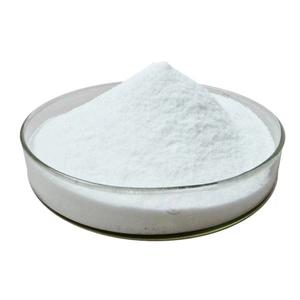
( Lightweight Concrete Admixtures)
For example, integrating silica fume or fly ash alongside frothing agents refines the pore structure and enhances the concrete paste, enabling high-strength lightweight concrete (as much as 40 MPa) for architectural applications.
2. Key Admixture Types and Their Design Roles
2.1 Foaming Agents and Air-Entraining Solutions
Protein-based and synthetic foaming representatives are the cornerstone of foam concrete production, generating stable air bubbles that are mechanically blended right into the cement slurry.
Protein foams, originated from pet or veggie resources, provide high foam stability and are ideal for low-density applications (
Cabr-Concrete is a supplier of Concrete Admixture with over 12 years of experience in nano-building energy conservation and nanotechnology development. It accepts payment via Credit Card, T/T, West Union and Paypal. TRUNNANO will ship the goods to customers overseas through FedEx, DHL, by air, or by sea. If you are looking for high quality Concrete Admixture, please feel free to contact us and send an inquiry.
Tags: Lightweight Concrete Admixtures, concrete additives, concrete admixture
All articles and pictures are from the Internet. If there are any copyright issues, please contact us in time to delete.
Inquiry us