1. Essential Principles and Refine Categories
1.1 Definition and Core System

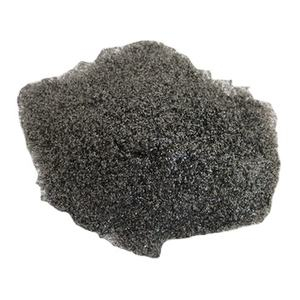
(3d printing alloy powder)
Metal 3D printing, also referred to as metal additive manufacturing (AM), is a layer-by-layer construction method that develops three-dimensional metallic components directly from digital models utilizing powdered or wire feedstock.
Unlike subtractive approaches such as milling or turning, which get rid of product to achieve shape, metal AM adds material only where needed, making it possible for extraordinary geometric complexity with minimal waste.
The procedure starts with a 3D CAD version sliced into thin horizontal layers (normally 20– 100 µm thick). A high-energy resource– laser or electron beam of light– selectively thaws or fuses metal bits according to every layer’s cross-section, which strengthens upon cooling down to develop a dense solid.
This cycle repeats till the full component is created, often within an inert environment (argon or nitrogen) to avoid oxidation of responsive alloys like titanium or light weight aluminum.
The resulting microstructure, mechanical properties, and surface finish are governed by thermal background, check approach, and material qualities, calling for precise control of process specifications.
1.2 Significant Steel AM Technologies
The two leading powder-bed blend (PBF) modern technologies are Selective Laser Melting (SLM) and Electron Light Beam Melting (EBM).
SLM makes use of a high-power fiber laser (generally 200– 1000 W) to completely melt steel powder in an argon-filled chamber, creating near-full density (> 99.5%) get rid of fine feature resolution and smooth surface areas.
EBM utilizes a high-voltage electron light beam in a vacuum setting, running at greater develop temperatures (600– 1000 ° C), which minimizes recurring stress and enables crack-resistant processing of weak alloys like Ti-6Al-4V or Inconel 718.
Past PBF, Directed Energy Deposition (DED)– consisting of Laser Steel Deposition (LMD) and Wire Arc Ingredient Production (WAAM)– feeds steel powder or wire into a liquified pool created by a laser, plasma, or electric arc, suitable for massive repairs or near-net-shape components.
Binder Jetting, though much less mature for metals, entails depositing a liquid binding representative onto steel powder layers, followed by sintering in a heating system; it provides broadband however reduced density and dimensional accuracy.
Each innovation balances compromises in resolution, build price, product compatibility, and post-processing needs, directing choice based upon application needs.
2. Materials and Metallurgical Considerations
2.1 Usual Alloys and Their Applications
Steel 3D printing sustains a vast array of engineering alloys, including stainless steels (e.g., 316L, 17-4PH), tool steels (H13, Maraging steel), nickel-based superalloys (Inconel 625, 718), titanium alloys (Ti-6Al-4V, CP-Ti), light weight aluminum (AlSi10Mg, Sc-modified Al), and cobalt-chrome (CoCrMo).
Stainless steels use corrosion resistance and moderate stamina for fluidic manifolds and clinical instruments.
(3d printing alloy powder)
Nickel superalloys master high-temperature environments such as wind turbine blades and rocket nozzles due to their creep resistance and oxidation stability.
Titanium alloys combine high strength-to-density proportions with biocompatibility, making them ideal for aerospace brackets and orthopedic implants.
Aluminum alloys allow light-weight architectural components in auto and drone applications, though their high reflectivity and thermal conductivity pose challenges for laser absorption and thaw pool stability.
Product development proceeds with high-entropy alloys (HEAs) and functionally graded compositions that shift buildings within a solitary part.
2.2 Microstructure and Post-Processing Requirements
The fast home heating and cooling down cycles in metal AM create one-of-a-kind microstructures– usually fine cellular dendrites or columnar grains aligned with warm circulation– that differ considerably from cast or wrought counterparts.
While this can enhance toughness through grain refinement, it may likewise present anisotropy, porosity, or residual stress and anxieties that jeopardize tiredness performance.
Subsequently, almost all metal AM parts need post-processing: anxiety relief annealing to reduce distortion, warm isostatic pressing (HIP) to close internal pores, machining for vital resistances, and surface area completing (e.g., electropolishing, shot peening) to improve fatigue life.
Warmth treatments are tailored to alloy systems– for example, option aging for 17-4PH to attain precipitation hardening, or beta annealing for Ti-6Al-4V to enhance ductility.
Quality control depends on non-destructive screening (NDT) such as X-ray computed tomography (CT) and ultrasonic evaluation to detect inner issues undetectable to the eye.
3. Style Liberty and Industrial Influence
3.1 Geometric Innovation and Functional Integration
Metal 3D printing unlocks design standards impossible with standard manufacturing, such as inner conformal cooling channels in injection mold and mildews, latticework frameworks for weight reduction, and topology-optimized lots paths that minimize product use.
Components that once called for assembly from dozens of elements can now be printed as monolithic systems, lowering joints, bolts, and prospective failure points.
This functional assimilation enhances dependability in aerospace and medical gadgets while cutting supply chain intricacy and stock prices.
Generative style formulas, coupled with simulation-driven optimization, instantly develop natural shapes that fulfill performance targets under real-world lots, pushing the limits of efficiency.
Customization at range becomes practical– oral crowns, patient-specific implants, and bespoke aerospace fittings can be generated financially without retooling.
3.2 Sector-Specific Adoption and Financial Worth
Aerospace leads fostering, with companies like GE Aeronautics printing gas nozzles for jump engines– combining 20 components right into one, lowering weight by 25%, and boosting toughness fivefold.
Clinical device makers leverage AM for permeable hip stems that encourage bone ingrowth and cranial plates matching individual anatomy from CT scans.
Automotive firms make use of steel AM for fast prototyping, lightweight braces, and high-performance racing elements where efficiency outweighs price.
Tooling sectors take advantage of conformally cooled mold and mildews that reduced cycle times by up to 70%, boosting performance in mass production.
While maker expenses remain high (200k– 2M), declining costs, boosted throughput, and licensed material databases are increasing accessibility to mid-sized enterprises and service bureaus.
4. Obstacles and Future Instructions
4.1 Technical and Accreditation Obstacles
Regardless of progress, steel AM deals with obstacles in repeatability, credentials, and standardization.
Small variations in powder chemistry, wetness material, or laser emphasis can alter mechanical residential properties, demanding strenuous process control and in-situ tracking (e.g., thaw pool cams, acoustic sensors).
Accreditation for safety-critical applications– particularly in air travel and nuclear industries– requires substantial analytical recognition under frameworks like ASTM F42, ISO/ASTM 52900, and NADCAP, which is lengthy and pricey.
Powder reuse methods, contamination threats, and absence of universal product specifications additionally complicate commercial scaling.
Efforts are underway to establish digital doubles that connect procedure specifications to component efficiency, allowing anticipating quality control and traceability.
4.2 Emerging Fads and Next-Generation Equipments
Future developments include multi-laser systems (4– 12 lasers) that considerably increase build rates, crossbreed devices combining AM with CNC machining in one platform, and in-situ alloying for custom-made structures.
Artificial intelligence is being incorporated for real-time problem detection and adaptive criterion modification during printing.
Lasting initiatives focus on closed-loop powder recycling, energy-efficient beam sources, and life cycle evaluations to measure environmental benefits over typical approaches.
Study into ultrafast lasers, chilly spray AM, and magnetic field-assisted printing may overcome present limitations in reflectivity, recurring tension, and grain positioning control.
As these technologies develop, metal 3D printing will shift from a specific niche prototyping device to a mainstream manufacturing technique– reshaping how high-value metal parts are made, made, and released across sectors.
5. Vendor
TRUNNANO is a supplier of Spherical Tungsten Powder with over 12 years of experience in nano-building energy conservation and nanotechnology development. It accepts payment via Credit Card, T/T, West Union and Paypal. Trunnano will ship the goods to customers overseas through FedEx, DHL, by air, or by sea. If you want to know more about Spherical Tungsten Powder, please feel free to contact us and send an inquiry.
Tags: 3d printing, 3d printing metal powder, powder metallurgy 3d printing
All articles and pictures are from the Internet. If there are any copyright issues, please contact us in time to delete.
Inquiry us