1. Product Principles and Architectural Characteristics of Alumina 1.1 Crystallographic Phases and Surface Area Attributes (Alumina Ceramic Chemical Catalyst Supports) Alumina (Al Two O THREE), particularly in its α-phase form, is just one of one of the most extensively used ceramic materials for chemical driver sustains because of its exceptional thermal security, mechanical strength, and […]
1. Material Fundamentals and Structural Qualities of Alumina 1.1 Crystallographic Phases and Surface Area Features (Alumina Ceramic Chemical Catalyst Supports) Alumina (Al â‚‚ O ₃), particularly in its α-phase type, is just one of one of the most commonly used ceramic products for chemical stimulant sustains due to its exceptional thermal security, mechanical toughness, and […]
1. Material Principles and Microstructural Characteristics 1.1 Composition and Crystallographic Properties of Al Two O THREE (Alumina Ceramic Balls, Alumina Ceramic Balls) Alumina ceramic rounds are round parts made from light weight aluminum oxide (Al two O THREE), a fully oxidized, polycrystalline ceramic that exhibits exceptional firmness, chemical inertness, and thermal stability. The main crystalline […]
1. Crystal Framework and Layered Anisotropy 1.1 The 2H and 1T Polymorphs: Architectural and Electronic Duality (Molybdenum Disulfide) Molybdenum disulfide (MoS TWO) is a layered change metal dichalcogenide (TMD) with a chemical formula including one molybdenum atom sandwiched between two sulfur atoms in a trigonal prismatic sychronisation, developing covalently adhered S– Mo– S sheets. These […]
1. Crystal Structure and Split Anisotropy 1.1 The 2H and 1T Polymorphs: Architectural and Digital Duality (Molybdenum Disulfide) Molybdenum disulfide (MoS â‚‚) is a split change steel dichalcogenide (TMD) with a chemical formula consisting of one molybdenum atom sandwiched between 2 sulfur atoms in a trigonal prismatic coordination, forming covalently bound S– Mo– S sheets. […]
1. Principles of Silica Sol Chemistry and Colloidal Stability 1.1 Make-up and Fragment Morphology (Silica Sol) Silica sol is a stable colloidal dispersion including amorphous silicon dioxide (SiO â‚‚) nanoparticles, usually varying from 5 to 100 nanometers in size, suspended in a fluid stage– most typically water. These nanoparticles are composed of a three-dimensional network […]
1. Basic Framework and Product Make-up 1.1 The Nanoscale Architecture of Aerogels (Aerogel Blanket) Aerogel blankets are advanced thermal insulation materials built on a special nanostructured framework, where a strong silica or polymer network covers an ultra-high porosity quantity– generally surpassing 90% air. This structure stems from the sol-gel procedure, in which a liquid precursor […]
1. Material Fundamentals and Microstructural Layout 1.1 Composition and Crystallographic Security of Alumina (Alumina Ceramic Nozzles) Alumina (Al Two O FOUR), especially in its alpha phase, is a completely oxidized ceramic with a corundum-type hexagonal close-packed framework, providing remarkable thermal stability, chemical inertness, and mechanical strength at raised temperatures. High-purity alumina (typically 95– 99.9% Al […]
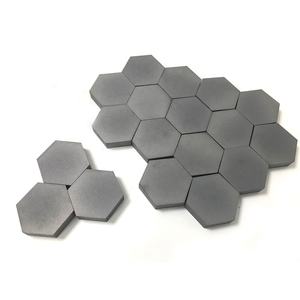
1. Crystal Framework and Polytypism of Silicon Carbide 1.1 Cubic and Hexagonal Polytypes: From 3C to 6H and Past (Silicon Carbide Ceramics) Silicon carbide (SiC) is a covalently adhered ceramic made up of silicon and carbon atoms set up in a tetrahedral sychronisation, forming one of one of the most complicated systems of polytypism in […]
1. Crystallography and Polymorphism of Titanium Dioxide 1.1 Anatase, Rutile, and Brookite: Structural and Digital Differences ( Titanium Dioxide) Titanium dioxide (TiO â‚‚) is a normally occurring steel oxide that exists in 3 main crystalline forms: rutile, anatase, and brookite, each exhibiting unique atomic arrangements and digital buildings despite sharing the very same chemical formula. […]