1. Crystal Framework and Layered Anisotropy 1.1 The 2H and 1T Polymorphs: Architectural and Electronic Duality (Molybdenum Disulfide) Molybdenum disulfide (MoS TWO) is a layered change metal dichalcogenide (TMD) with a chemical formula including one molybdenum atom sandwiched between two sulfur atoms in a trigonal prismatic sychronisation, developing covalently adhered S– Mo– S sheets. These […]
1. Crystal Structure and Split Anisotropy 1.1 The 2H and 1T Polymorphs: Architectural and Digital Duality (Molybdenum Disulfide) Molybdenum disulfide (MoS â‚‚) is a split change steel dichalcogenide (TMD) with a chemical formula consisting of one molybdenum atom sandwiched between 2 sulfur atoms in a trigonal prismatic coordination, forming covalently bound S– Mo– S sheets. […]
1. Principles of Silica Sol Chemistry and Colloidal Stability 1.1 Make-up and Fragment Morphology (Silica Sol) Silica sol is a stable colloidal dispersion including amorphous silicon dioxide (SiO â‚‚) nanoparticles, usually varying from 5 to 100 nanometers in size, suspended in a fluid stage– most typically water. These nanoparticles are composed of a three-dimensional network […]
1. Basic Framework and Product Make-up 1.1 The Nanoscale Architecture of Aerogels (Aerogel Blanket) Aerogel blankets are advanced thermal insulation materials built on a special nanostructured framework, where a strong silica or polymer network covers an ultra-high porosity quantity– generally surpassing 90% air. This structure stems from the sol-gel procedure, in which a liquid precursor […]
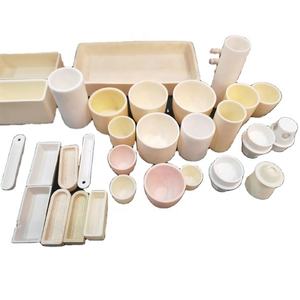
1. Material Fundamentals and Microstructural Layout 1.1 Composition and Crystallographic Security of Alumina (Alumina Ceramic Nozzles) Alumina (Al Two O FOUR), especially in its alpha phase, is a completely oxidized ceramic with a corundum-type hexagonal close-packed framework, providing remarkable thermal stability, chemical inertness, and mechanical strength at raised temperatures. High-purity alumina (typically 95– 99.9% Al […]
1. Crystal Framework and Polytypism of Silicon Carbide 1.1 Cubic and Hexagonal Polytypes: From 3C to 6H and Past (Silicon Carbide Ceramics) Silicon carbide (SiC) is a covalently adhered ceramic made up of silicon and carbon atoms set up in a tetrahedral sychronisation, forming one of one of the most complicated systems of polytypism in […]
1. Crystallography and Polymorphism of Titanium Dioxide 1.1 Anatase, Rutile, and Brookite: Structural and Digital Differences ( Titanium Dioxide) Titanium dioxide (TiO â‚‚) is a normally occurring steel oxide that exists in 3 main crystalline forms: rutile, anatase, and brookite, each exhibiting unique atomic arrangements and digital buildings despite sharing the very same chemical formula. […]
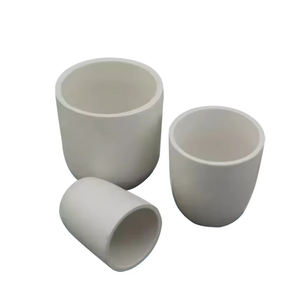
1. Make-up and Architectural Residences of Fused Quartz 1.1 Amorphous Network and Thermal Security (Quartz Crucibles) Quartz crucibles are high-temperature containers made from merged silica, an artificial kind of silicon dioxide (SiO TWO) stemmed from the melting of natural quartz crystals at temperature levels surpassing 1700 ° C. Unlike crystalline quartz, integrated silica has an […]
1. Material Principles and Microstructural Attributes of Alumina Ceramics 1.1 Composition, Pureness Qualities, and Crystallographic Quality (Alumina Ceramic Wear Liners) Alumina (Al Two O ₃), or light weight aluminum oxide, is just one of one of the most widely used technical porcelains in industrial engineering because of its exceptional equilibrium of mechanical strength, chemical stability, […]
1. Fundamental Chemistry and Crystallographic Design of Boron Carbide 1.1 Molecular Structure and Architectural Intricacy (Boron Carbide Ceramic) Boron carbide (B â‚„ C) stands as one of the most interesting and technologically vital ceramic materials because of its unique mix of extreme solidity, low density, and phenomenal neutron absorption capability. Chemically, it is a non-stoichiometric […]